Let's Talk Business
At HOCW, we believe in helping others to help themselves. By learning marketable and entrepreneurial skills, our clients are able to develop ways to provide for themselves and their families.
Business Skills & Financial Literacy Program
Hope of Children and Women Victims of Violence (HOCW)
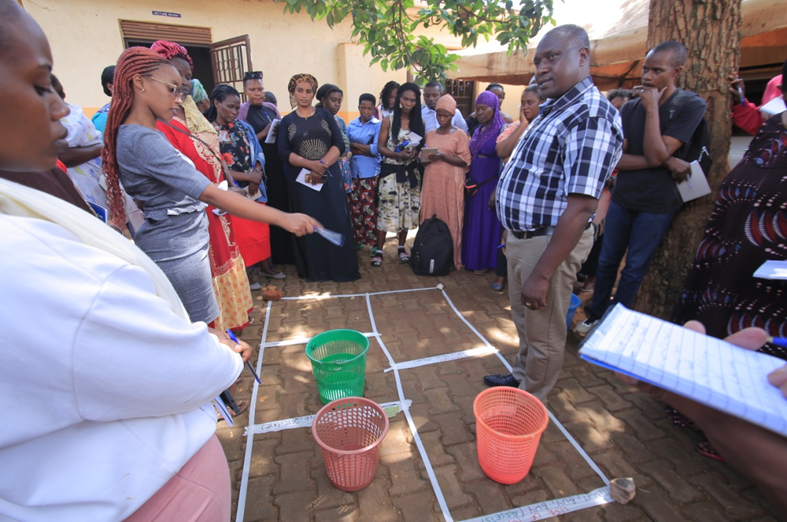
The Business Skills & Financial Literacy Program is a core component of HOCW’s Economic Resilience & Sustainability pillar, designed to ensure that women survivors of violence, adolescent girls, and vulnerable caregivers are equipped not only with technical skills, but also with the knowledge required to run sustainable small businesses.
Recognizing that income-generating skills alone are insufficient without financial management capacity, HOCW integrates business education across all livelihood initiatives.
Program Purpose
The program strengthens women’s ability to:
Start and manage small businesses
Make informed financial decisions
Protect household income and assets
Transition from survival-based activities to sustainable enterprises
This directly supports family stability and long-term self-reliance.
Core Learning Areas
Participants receive practical, context-appropriate training in:
Basic business planning and entrepreneurship
Counting cash and managing daily sales
Record keeping and bookkeeping
Balancing books and tracking profits and losses
Budgeting for households and businesses
Pricing, saving, and reinvestment
Understanding loans, interest, and repayment obligations
Training is adapted for varying literacy levels and delivered using participatory, practical methods.
Integration with Other Programs
Business classes are intentionally linked to HOCW’s livelihood initiatives, including:
Tailoring and Hairdressing Skills Development
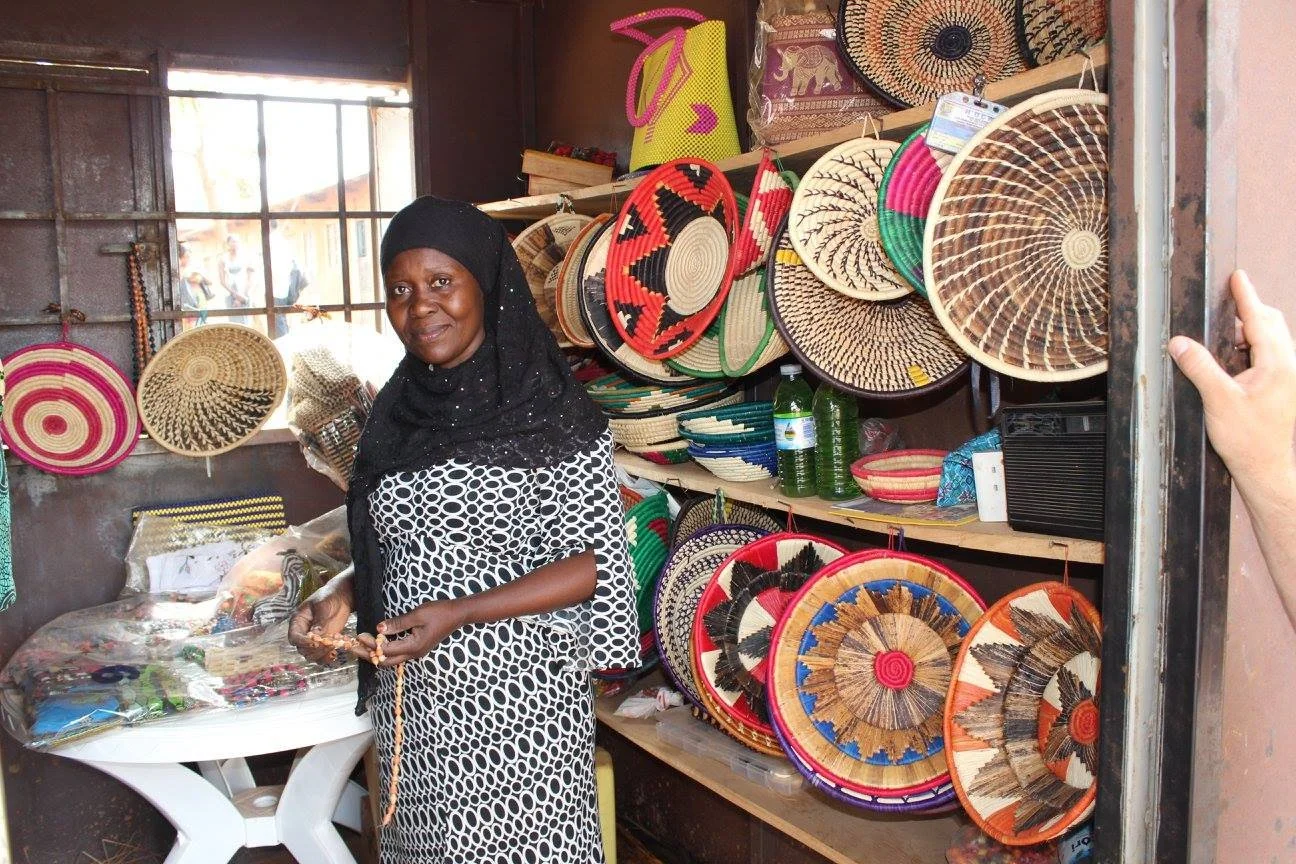
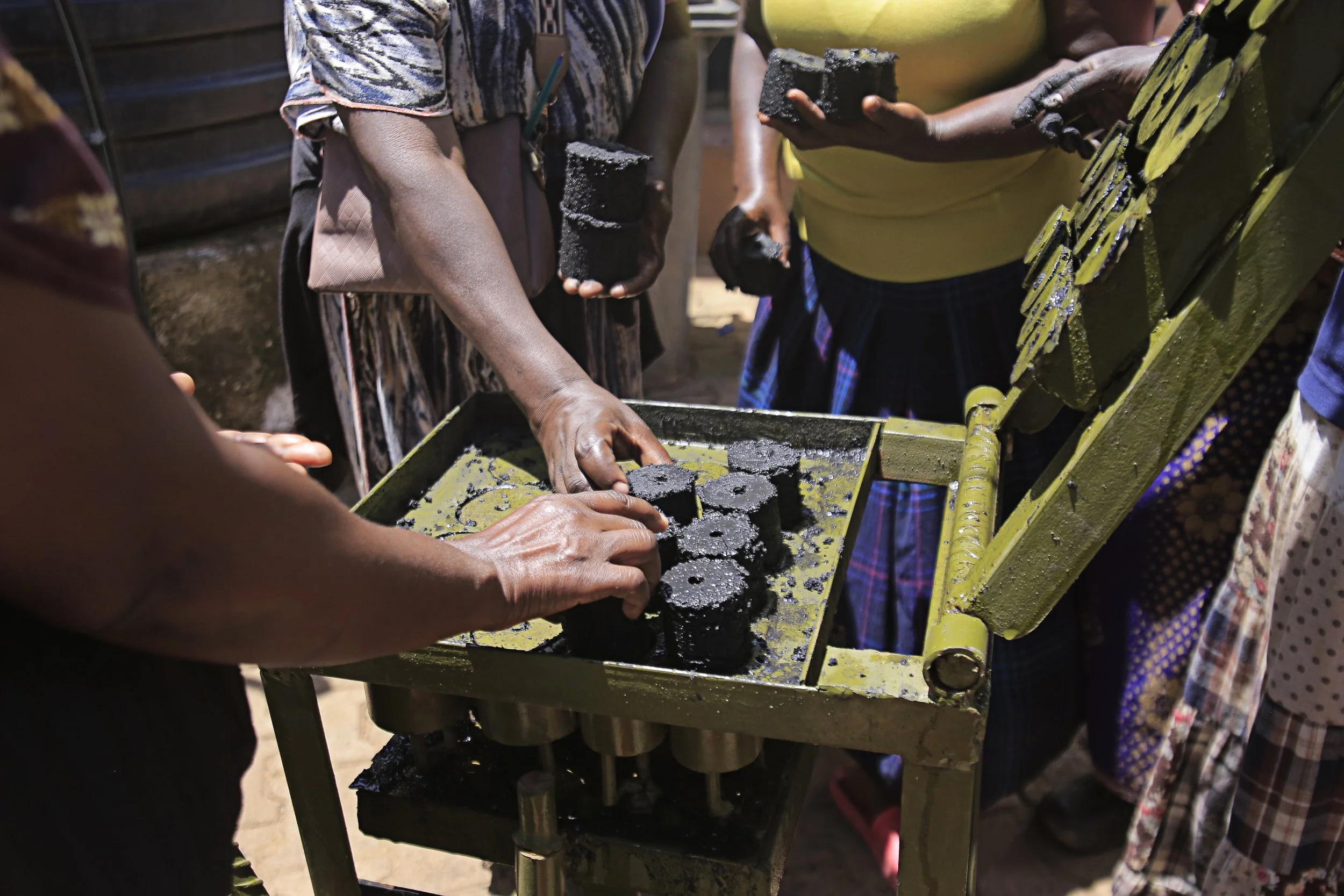
Catering, soap making, charcoal briquettes, ICT, and crafts
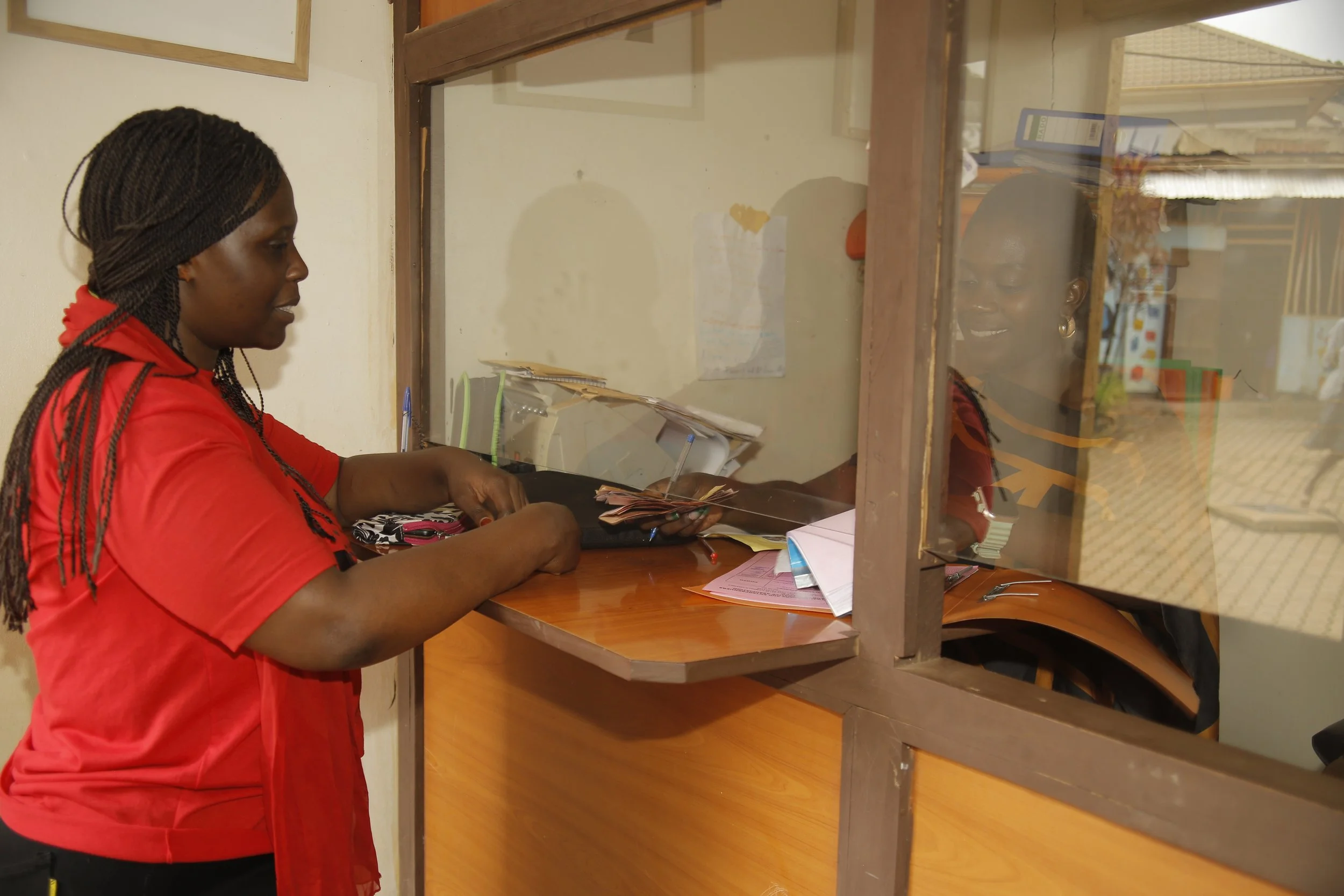
The HOCW SACCO, which provides access to savings and small loans
This integration ensures that participants can immediately apply business skills to real income-generating activities.
The Business Skills & Financial Literacy Program contributes to:
Women’s economic empowerment, increasing control over income and resources
Child wellbeing, as improved financial management supports education, nutrition, and healthcare
Protection outcomes, by reducing financial stress and vulnerability to exploitation
By strengthening caregivers’ economic capacity, the program supports children’s stability and development.
Contribution to Sustainability
Strong business management skills increase:
Success rates of women-led micro-enterprises
Loan repayment within the SACCO
Collective economic resilience within HOCW-supported communities
This reinforces HOCW’s commitment to asset-based, community-driven solutions rather than short-term aid.
Community Collective
This collective approach ensures that participants graduate with practical skills, production experience, teamwork capacity, and confidence, rather than theory alone.
Contribution to the Two-Generation Model
The Women’s Tailoring Collective directly contributes to:
Women’s economic empowerment, enabling caregivers to generate income and support their households
Child wellbeing, as increased and stable income improves access to nutrition, education, and healthcare
Dignity and recovery, particularly for survivors rebuilding skills, confidence, and independence after violence
The flexibility of collective tailoring work allows women to earn income close to home, enabling continued engagement in their children’s care, protection, and early learning.
Tailoring Skills Development Program
Hope of Children and Women Victims of Violence (HOCW)
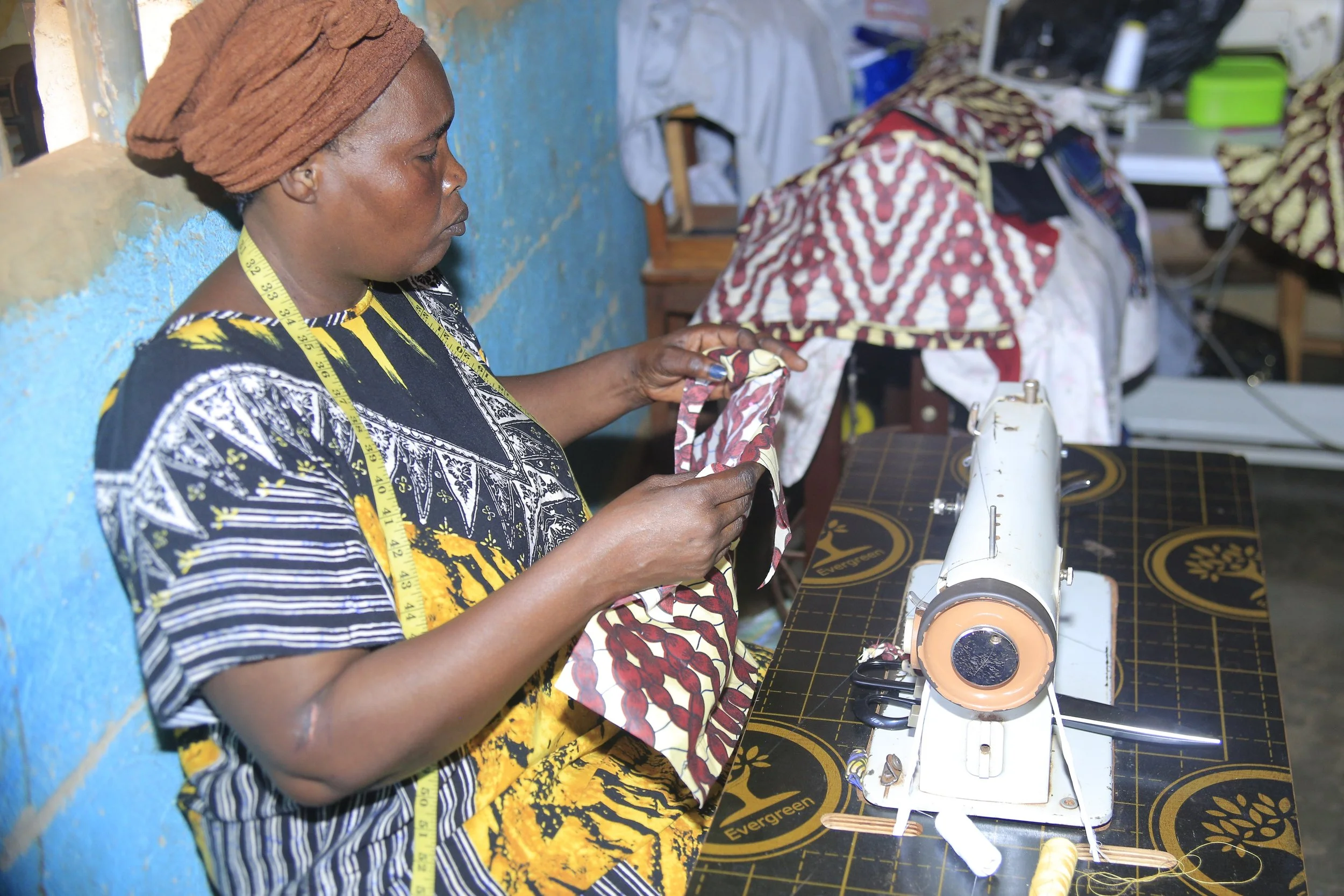
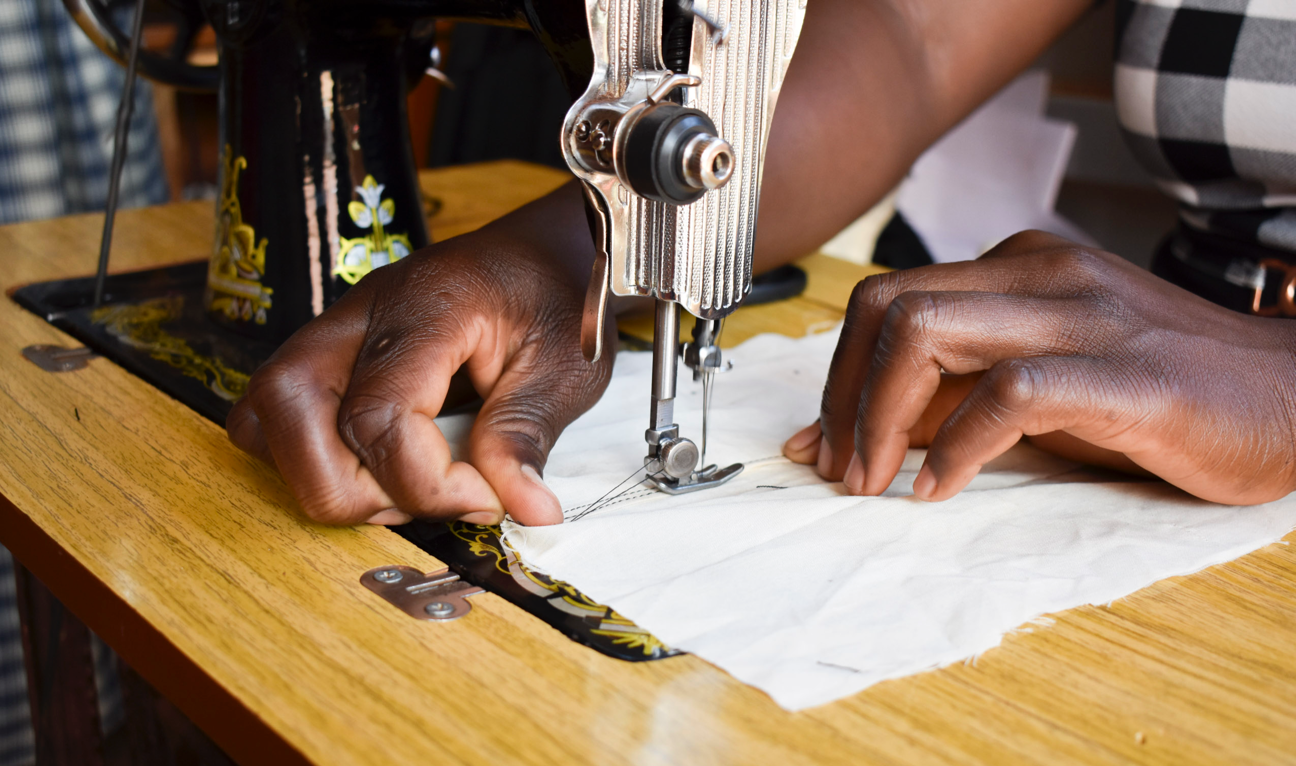
The Tailoring Skills Development Program is a practical, market-oriented livelihood initiative under HOCW’s Economic Resilience & Sustainability pillar. The program equips women survivors of violence, adolescent girls, and vulnerable caregivers with employable tailoring and garment-making skills that enable income generation, household stability, and long-term self-reliance.
Program Approach
Tailoring training is delivered through a hands-on, experiential learning model at HOCW’s on-site tailoring workshop. The workshop functions as both a training facility and a production space, allowing participants to learn in real working conditions.
Participants progress through a structured learning pathway that includes:
Observation of tailoring and garment-making techniques
Guided practice using sewing machines and hand tools
Supervised production of garments and textile items for real use and community clients
This approach ensures that learners graduate with practical skills, production experience, and confidence, rather than theory alone.
Skills Covered
The program covers core tailoring competencies, including:
Use and maintenance of sewing machines
Pattern making and fabric cutting
Garment construction and finishing
Repair and alteration services
Quality control and basic production planning
Customer service and order management
Where possible, training is complemented by basic business and financial literacy, linked to HOCW’s SACCO and savings groups to support enterprise start-up and growth.
The Tailoring Program directly contributes to:
Women’s economic empowerment, enabling caregivers to generate income and support their families
Child wellbeing, as increased household income improves access to nutrition, education, and healthcare
Dignity and recovery, particularly for survivors rebuilding skills, confidence, and independence after violence
The flexibility of tailoring work allows caregivers to earn income close to home, supporting active engagement in their children’s care and early learning.
The on-site tailoring workshop may generate modest income through the production of garments, school uniforms, and textile items for the community, contributing to:
Practical, real-world training opportunities
Reduced program costs
HOCW’s broader asset-based sustainability strategy
Hairdressing Skills Development Program
Hope of Children and Women Victims of Violence (HOCW)
The Hairdressing Skills Development Program is a practical, market-oriented livelihood initiative under HOCW’s Economic Resilience & Sustainability pillar. The program equips women survivors of violence, adolescent girls, and vulnerable caregivers with employable, income-generating skills that support household stability and long-term self-reliance.
Program Approach
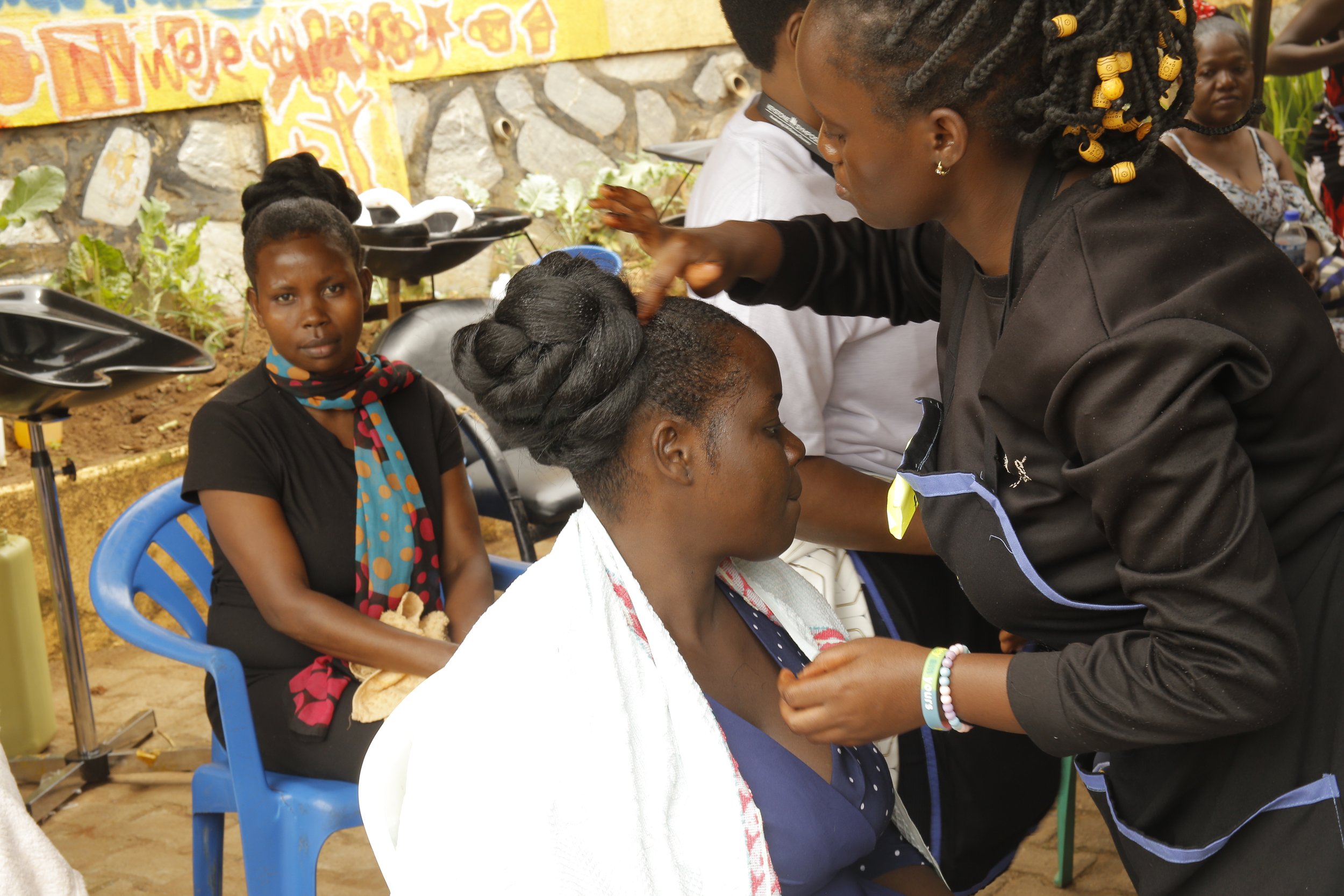
Like HOCW’s tailoring program, hairdressing training is delivered through a hands-on, experiential learning model. Training takes place at HOCW’s on-site salon, which functions both as a learning space and a community service point.
Participants progress through a structured learning pathway that includes:
Observation of professional techniques
Guided practice on mannequin heads
Supervised practice on real clients from the community
This approach ensures that learners graduate with practical competence, confidence, and customer-handling skills, not just theoretical knowledge.
Skills Covered
The program covers core hairdressing competencies, including:
Basic and advanced hair styling
Hair care and hygiene
Braiding and protective styles
Client consultation and service ethics
Basic salon management and customer care
Where possible, training is complemented by basic business and financial literacy, linked to HOCW’s SACCO and savings groups.
Link to the Two-Generation Model
The Hairdressing Program directly contributes to:
Women’s economic empowerment, enabling caregivers to earn income and meet family needs
Child wellbeing, as increased household income supports nutrition, education, and health
Dignity and recovery, particularly for survivors rebuilding confidence after violence
By enabling women to earn close to home, the program also allows caregivers to remain engaged in their children’s care and early learning.
Contribution to Sustainability
The on-site salon may also generate modest income through services offered to the community, contributing to:
Practical learning opportunities
Reduced training costs
HOCW’s broader asset-based sustainability strategy
Women’s Savings and Credit Cooperative (SACCO)
Hope of Children and Women Victims of Violence (HOCW)
As part of its Economic Resilience & Sustainability pillar, HOCW facilitates a member-owned Savings and Credit Cooperative Organization (SACCO) established by women survivors of violence and vulnerable caregivers. The SACCO grew out of HOCW-supported savings groups and has been transitioned into a registered cooperative to strengthen access to affordable, community-controlled finance.
What the SACCO Is
A SACCO is a democratic, member-owned saving and lending institution where members pool their savings and access loans for agreed purposes. While operating on principles similar to a commercial bank, the SACCO is designed to serve community members who are often excluded from formal banking systems due to high fees, high interest rates, or lack of collateral.
At HOCW, SACCO members are both savers and owners of the cooperative.
How the HOCW SACCO Works
Members make regular savings deposits and earn interest on their savings
Members can access small loans for:
Family or medical emergencies
Education-related costs
Starting or expanding micro-enterprises
Loans are repaid with agreed interest, which:
Covers administrative costs
Grows the SACCO’s capital base
Increases returns to members
Members collectively:
Decide how funds are loaned
Agree on interest rates and repayment terms
Elect board and committee members
Hold one another accountable for loan repayment
Financial Literacy and Capacity Building
Beyond access to capital, the HOCW SACCO is a platform for financial education and empowerment. Members receive training in:
Financial literacy and budgeting
Savings discipline
Income and expense tracking
Responsible borrowing and loan management
Basic business and enterprise planning
These skills strengthen household financial stability and reduce vulnerability to exploitation and debt cycles.
Why the SACCO Matters at HOCW
The SACCO directly supports HOCW’s Two-Generation Pathway by:
Increasing women’s economic independence, which improves child wellbeing and school retention
Reducing reliance on high-risk coping strategies
Enabling caregivers to invest in livelihoods, health, and education
Building collective responsibility, trust, and community ownership
For women recovering from violence and displacement, access to safe and affordable finance is a critical step from recovery to long-term stability.
CITIZEN CAFE
Citizen Café – Social Enterprise for Sustainability
Hope of Children and Women Victims of Violence (HOCW)
The Citizen Café is a community-based social enterprise established by HOCW as part of its asset-based sustainability strategy. The café plays a dual role: generating unrestricted income to support HOCW programs while providing affordable, reliable meals for staff and a welcoming space for community engagement.
Purpose and Rationale
HOCW is not a project-based organization but a community-rooted system built to last. The Citizen Café contributes directly to this vision by reducing dependency on donor funding and strengthening internal operational resilience.
The café also supports HOCW’s two-generation philosophy by creating an enabling environment where staff, caregivers, and community members can gather, connect, and access services with dignity.
Core Functions
1. Income Generation and Organizational Sustainability
The Citizen Café generates revenue that contributes to:
Day-to-day operational costs
Partial support to HOCW’s protection, ECD, and livelihoods programs
Long-term financial stability of the organization
This income supports HOCW’s commitment to self-reliance and sustainability.
2. Staff Welfare and Productivity
The café provides breakfast and lunch for HOCW staff, ensuring:
Improved staff wellbeing and morale
Reduced daily living costs for staff
Increased productivity and retention
This directly supports service quality across all program pillars.
3. Community Events and Social Inclusion
The Citizen Café is open to the wider community and is used for:
Introductions (traditional ceremonies)
Weddings
Birthday celebrations
Other social and community functions
By hosting these events, the café strengthens community ownership of HOCW and promotes positive interaction between refugee and host communities.